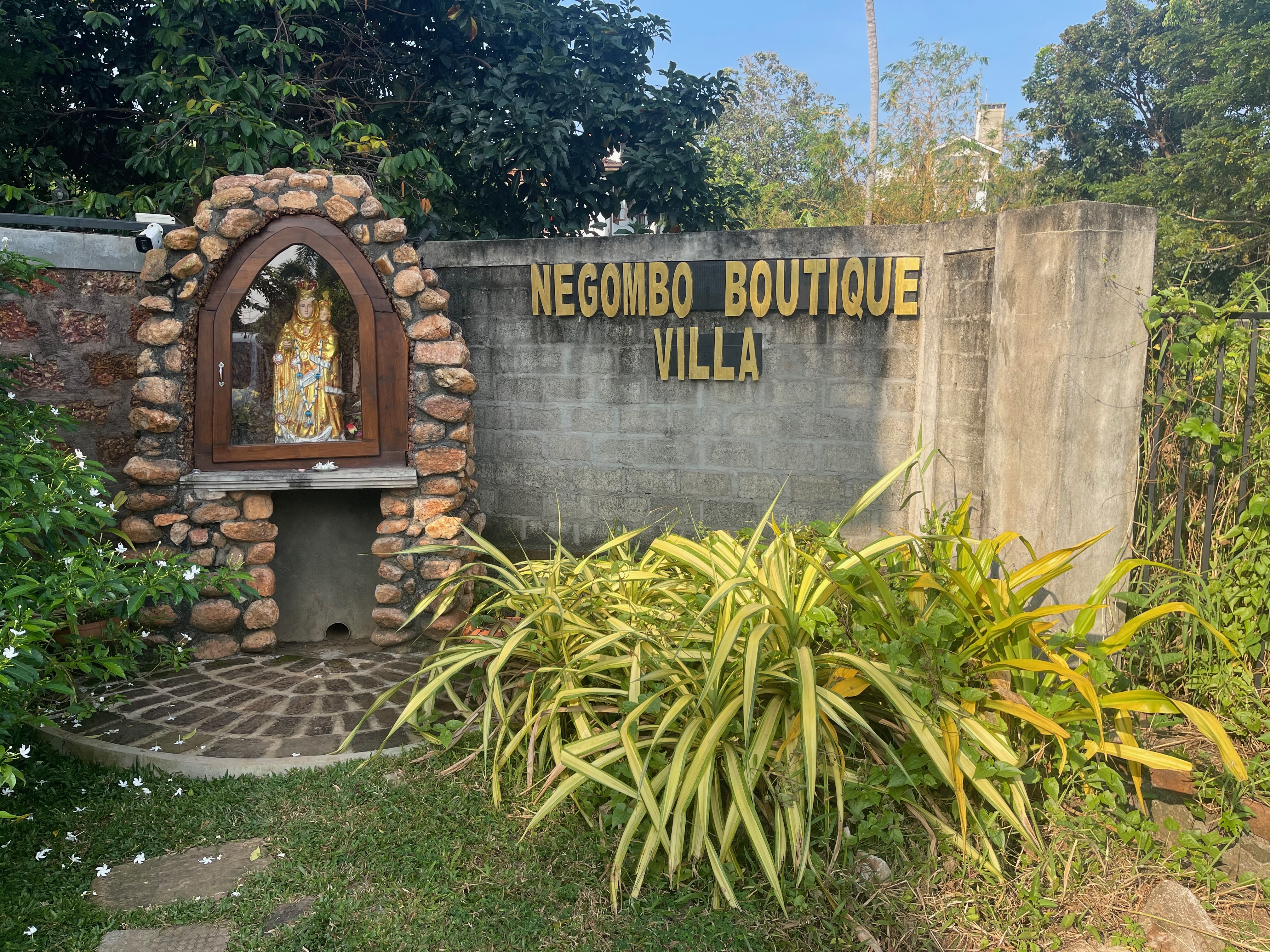
I arrive at the Negombo Boutique Villa after a five-hour drive from a wonderful stay in AMBA, an organic farm in the Uva Highlands.

I settle into the Elephant Room, the walls decorated with paintings of the beasts that have alluded me during my two-week stay in Sri Lanka. Simon, my host at AMBA had suggested, on arrival, taking a tuk tuk to Negombo’s old quarter and to the fish market, in particular.
“If you can stand the smell.”
But I am keen to soak up the last hours of sun before flying back in the morning to freezing London temperatures.
“Turn right next to the railway track and then right again to reach the sea” advises the hotel receptionist.
A long dusty road leads me over a metal bridge. Even the men clearing leaves from the Dutch Canal below are mopping their brows in in the blistering heat. There is no sight of the sea. Tuk tuks slow down, drivers lean out from under their tarpaulins and offer to take me to the beach. I resist until one driver anticipates my thoughts.
“It’s far too hot for the beach. Let me take you on a trip to the city’s old quarter, to the fish market.”
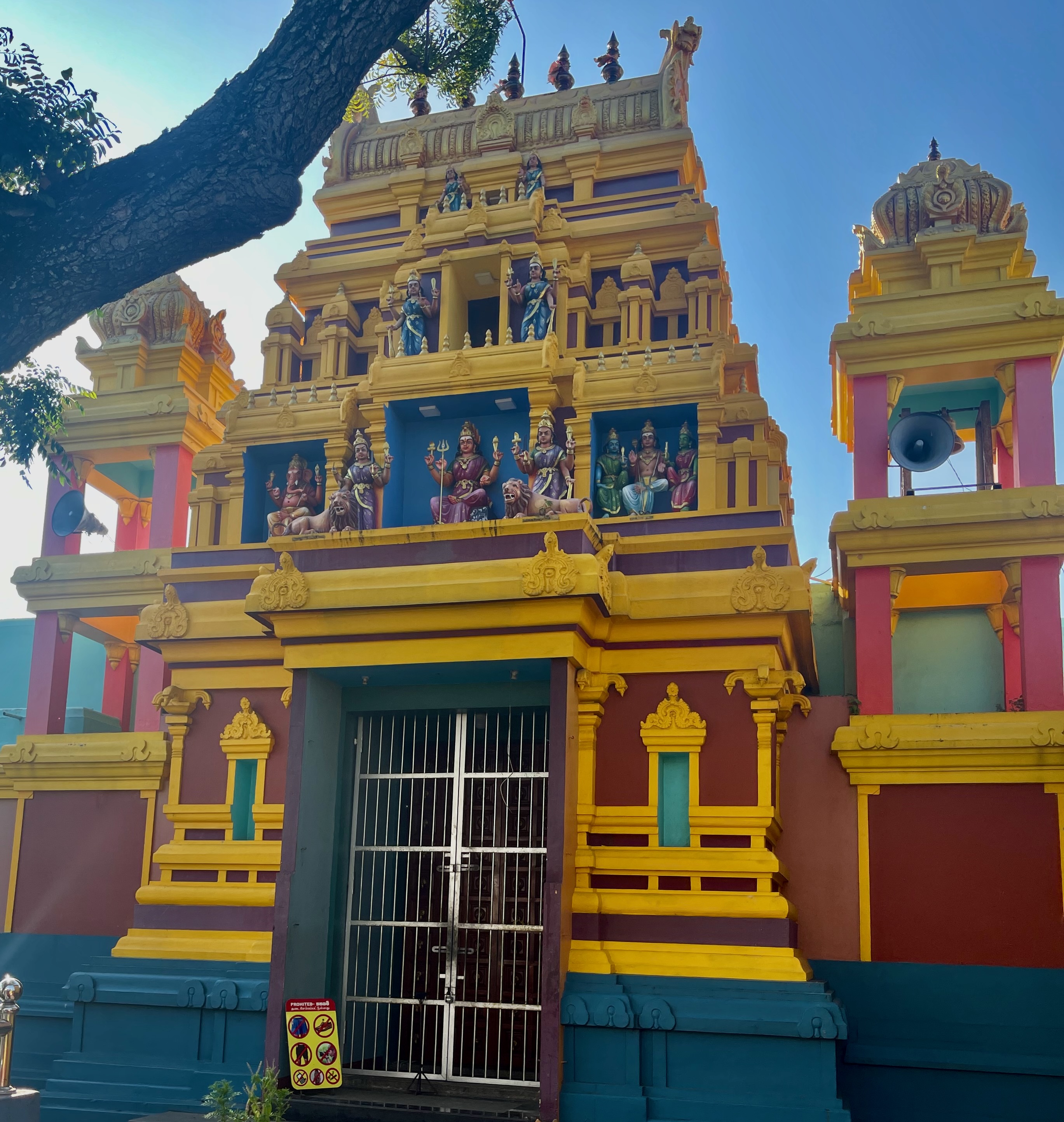
First stop is a Hindu temple on the coastal road. I look up to see if I can spy Shiva or Krishna but the sun blinds my eyes. Then I see Ganesh, my favourite Hindu deity, with his elephant head. This wise god of beginnings, a remover of obstacles, stands high up, guarded by lions, in a small alcove of the temple’s sunshine yellow facade.
I settle into the back seat of Rizwan’s tuk tuk, the cool breeze blowing strands of hair across my face as we weave between over-burdened motorbikes and gaily covered trucks.
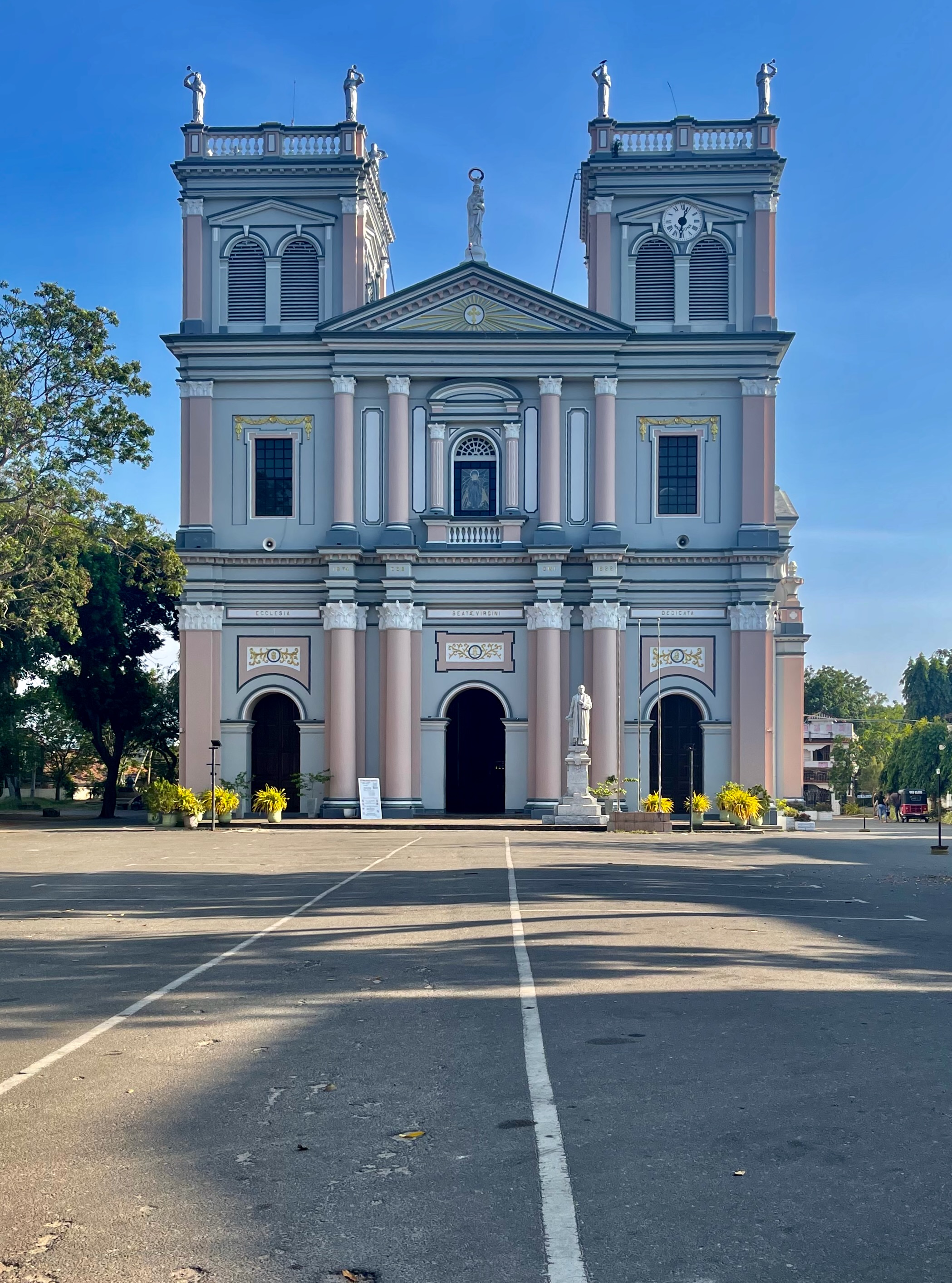
We drive past square sailed oruwa outriggers used by fishermen, called catamarans by Rizwan, on the shores of the lagoon. As the streets widen Rizwan points out several churches – St Mary’s and St Stephen’s, built after the Portuguese colonists defeated the Dutch. Two thirds of the population of Negombo – more than 130,000 – are Roman Catholic but not Rizwan. He is a Muslim.
Rizwan parks up at an expanse of sand bordered by black plastic make-shift huts. The smell is overpowering but this is not the traditional fish market mentioned by Simon. Instead, it is the dry fish market with thousands of fish laid out in neat rows according to type and exposed to the sun. Rizwan urges me to purchase a kilo or two of dried mullet or tuna to take back to the UK – I laugh, unsure customs would allow this.
“But where is the real fish market?” I ask.

“We will go there soon,” Rizwan assures me.
But Rizwan is keen to show me all that Negombo has to offer.
As if to counter the stench of the dried fish we drive to an ayurvedic garden – wafts of cumin, cardamom, turmeric and pineapple that the guide assures me would guarantee a slimmer self, tease my nostrils. I stand firm against entering the ayurvedic pharmacy – I am beginning to suspect Rizan’s cultural tour of the city may be driven by opportunities for commission.
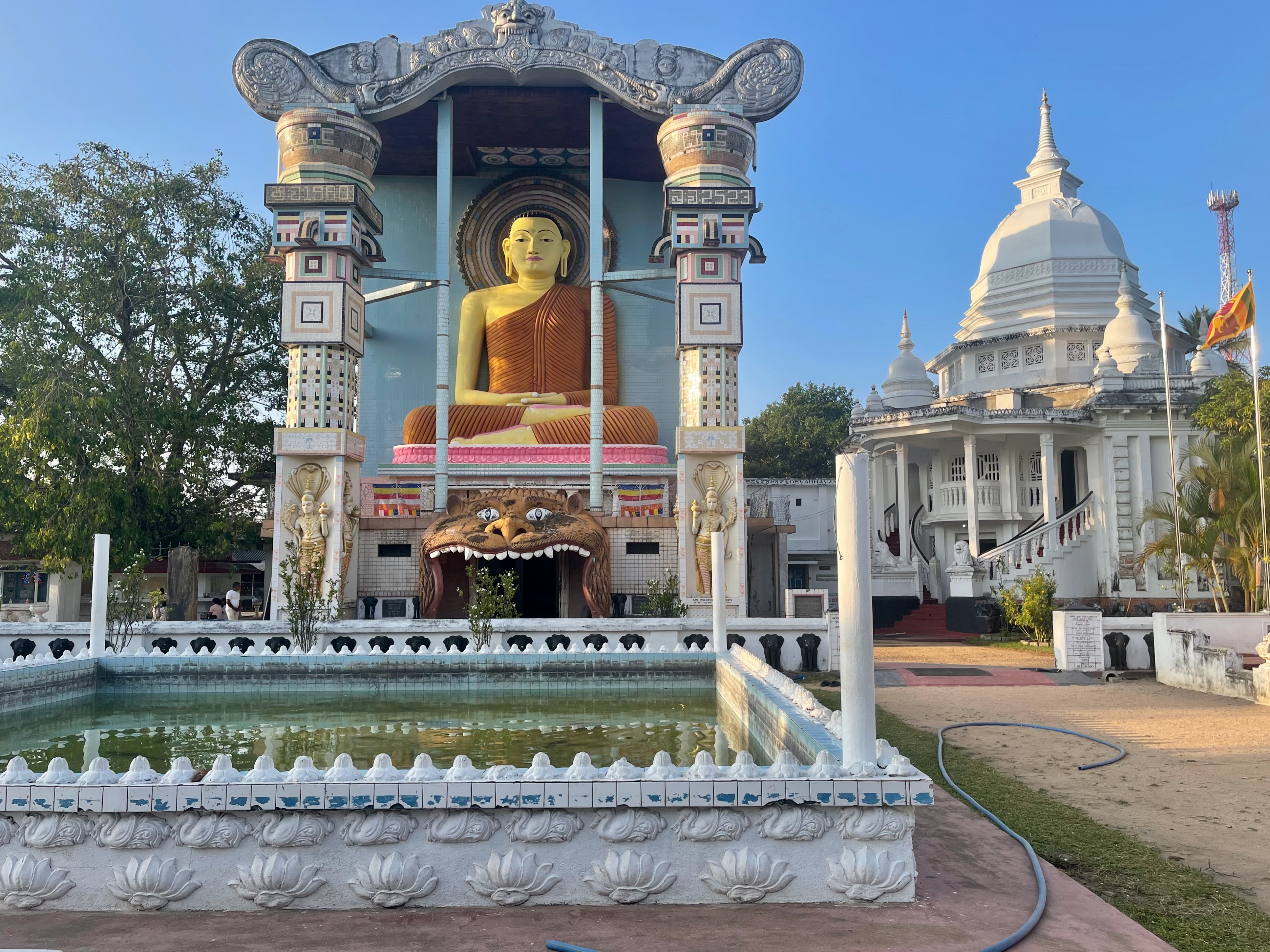
The Angurukaramulla Temple is an impressive shrine in a city where Buddhists are outflanked by Christians and Muslims. A dragon’s head at the base of a six-meter-tall Buddha statue, marks the entrance to the shrine room, offering protection to all. The temple also houses life-sized statues of every Sinhalese monarch from the founding Prince Vijaya to the ill-fated King Vikrama Rajasinha of Kandy deposed by the British in 1815.
“Is there no mosque in the city” I ask.
We travel through narrow alleyways with shops selling halal. This is the Muslim quarter.
“My house is down there. When we buy fish we can bring it home and my wife will cook it.”
We pass children dressed in white carrying copies of the Quran. Veiled woman in black peer out from tuk tuks. Rizwan points to his mosque with a huge copper dome but the traffic and my eagerness to see the fish market before the sun sets propel us forward.
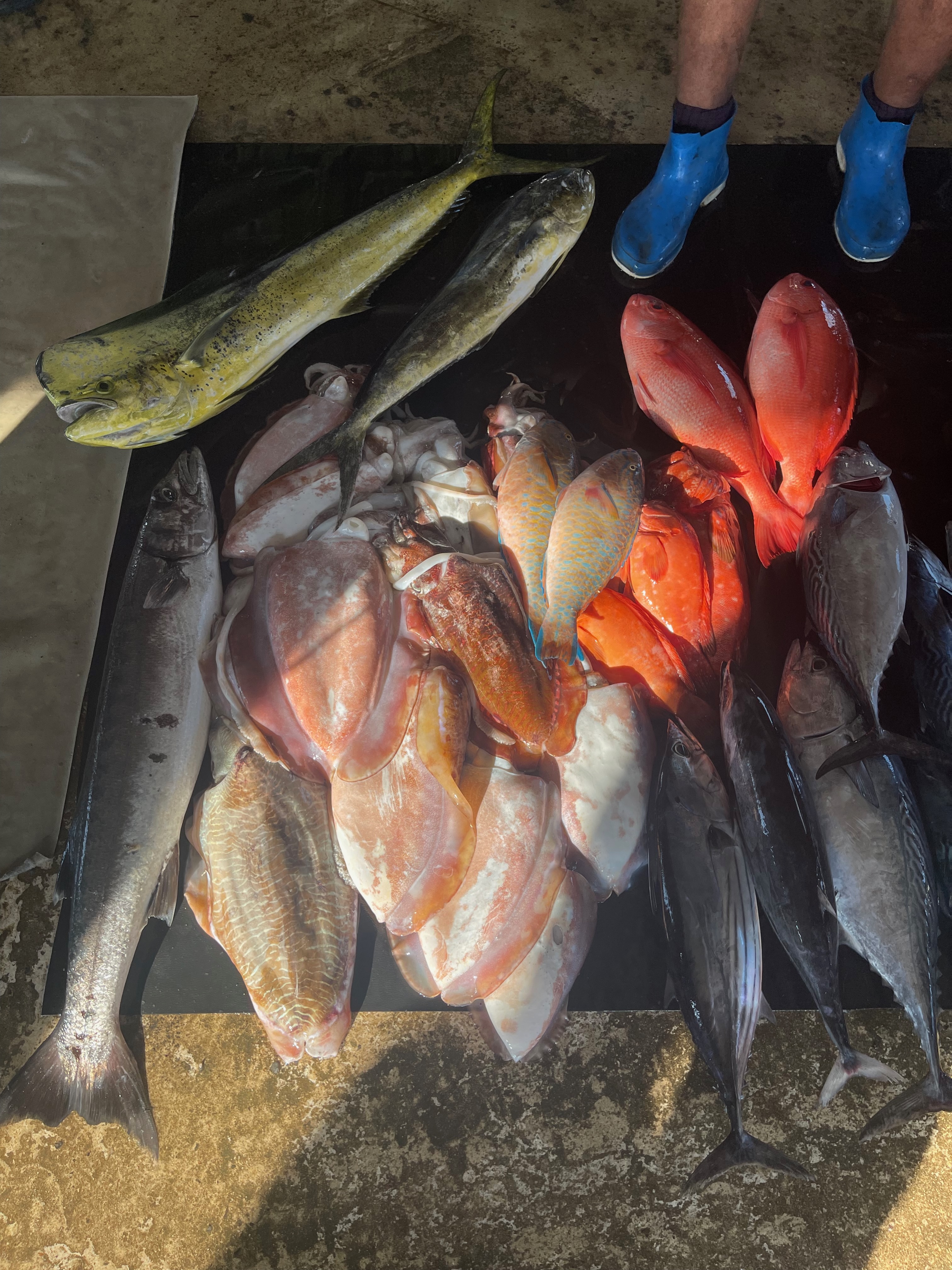
It is not the stench of the fish market that surprises me but the clamour of men standing in clusters bargaining over fish of all colours and sizes – dogtooth tuna, yellowfin tuna, wallago catfish and barramundi, some so enormous they need to be chopped up to be sold.
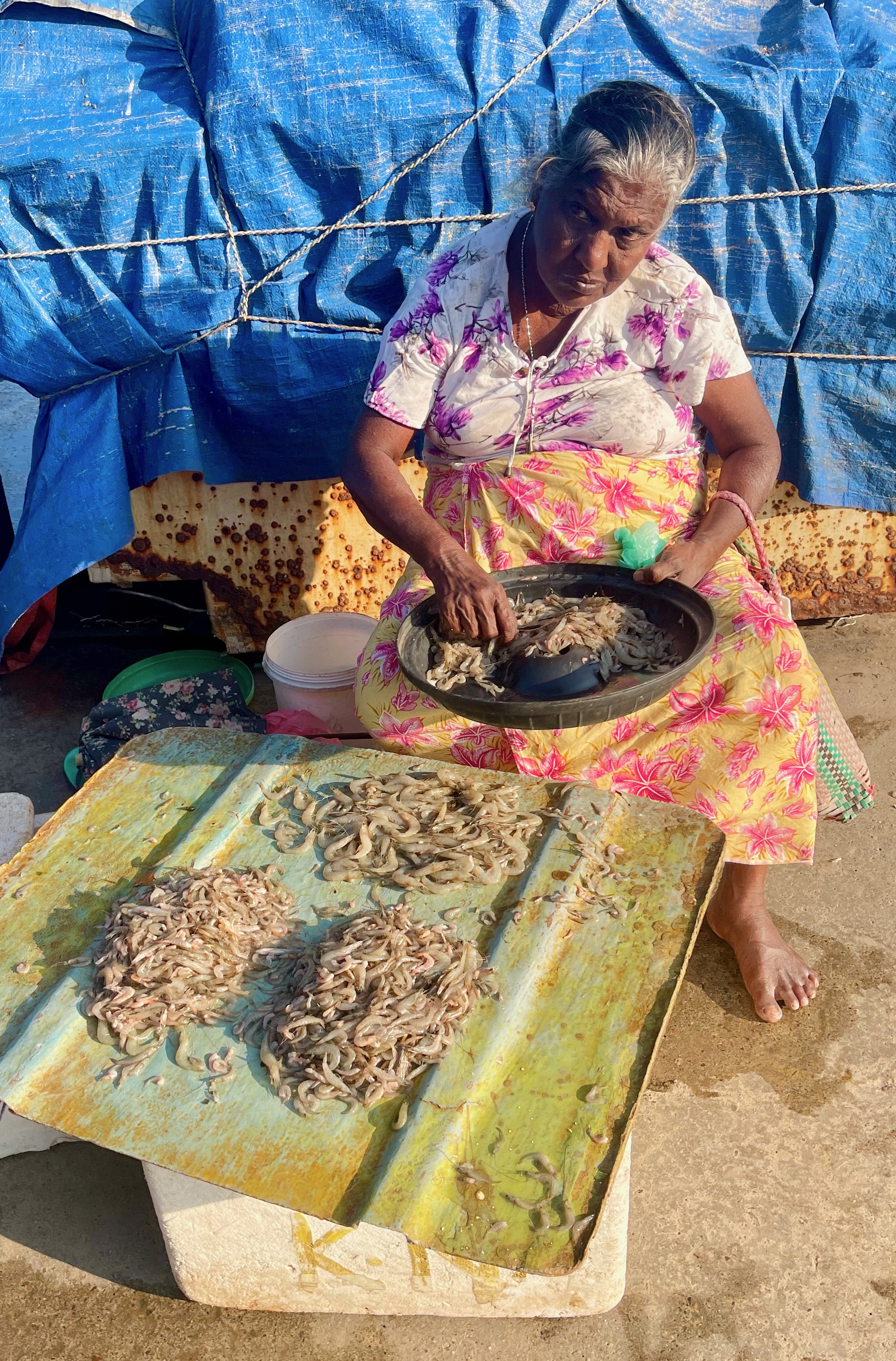
The only seller not attracting custom is a solitary, older woman guarding her crustaceans.
Rizwan drives me to Ocean 14 the restaurant that Hajra, my friend and fellow presenter at the Galle Literary Festival, has told me is the ideal place to watch the sun set on the beach. Rizwan promises to return in an hour as I have no idea how to find my way back to the hotel.
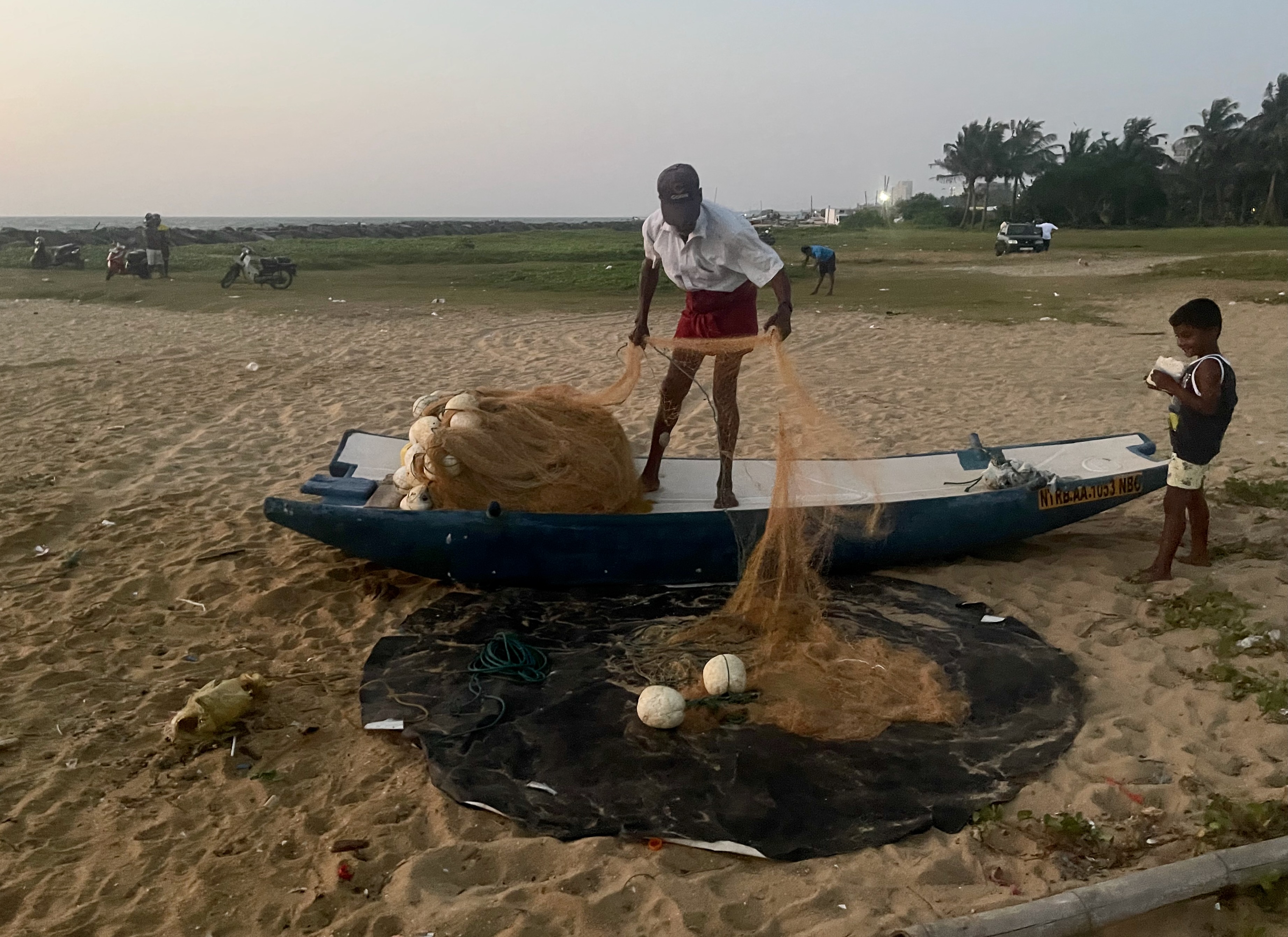
I settle down to a plate of grilled calamari and a beer and people watch. A man douses his terrified dog with salt water from the sea, a fisherman mends his nets under the watchful eye of his son, boisterous young men play basketball.
When Rizwan returns he suggests a walk along the beach. It is then I learn that he not only drives a tuk tuk but runs tours across Sri Lanka in his taxi and is a fisherman too. He works hard to put his two sons though a private school. He does not want them to be tuk tuk drivers. He has hopes for the future of Sri Lanka – tourists are returning and he believes the new president will be good for the country in contrast to the former president who lined his and his friends’ pockets during the tsunami and the pandemic.
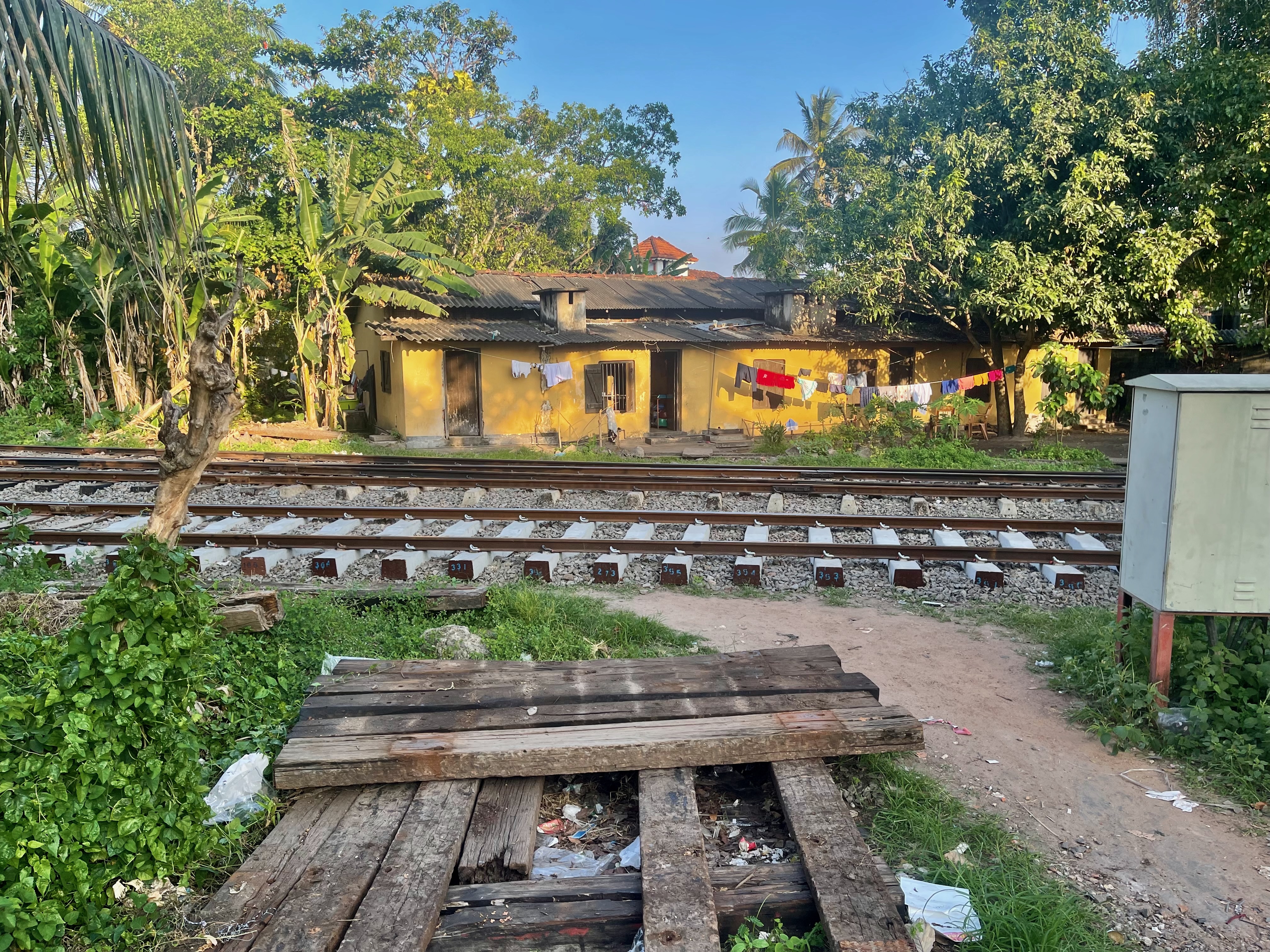
Lights flash and horns sound as we approach the railway line by the hotel in the dark. We break just in time as a train thunders past. There are no level crossings as such but there is something magical about being within touching distance of a train in the dark, seeing into lit carriages as passengers speed by to Colombo, down the coast or elsewhere.
I empty my purse of the last of my rupees – supporting Rizwan’s children’s education seems a worthy cause. I am grateful to Simon for his tips on Negombo, on my tuk tuk driver for protecting me from sunstroke and showing me his city.
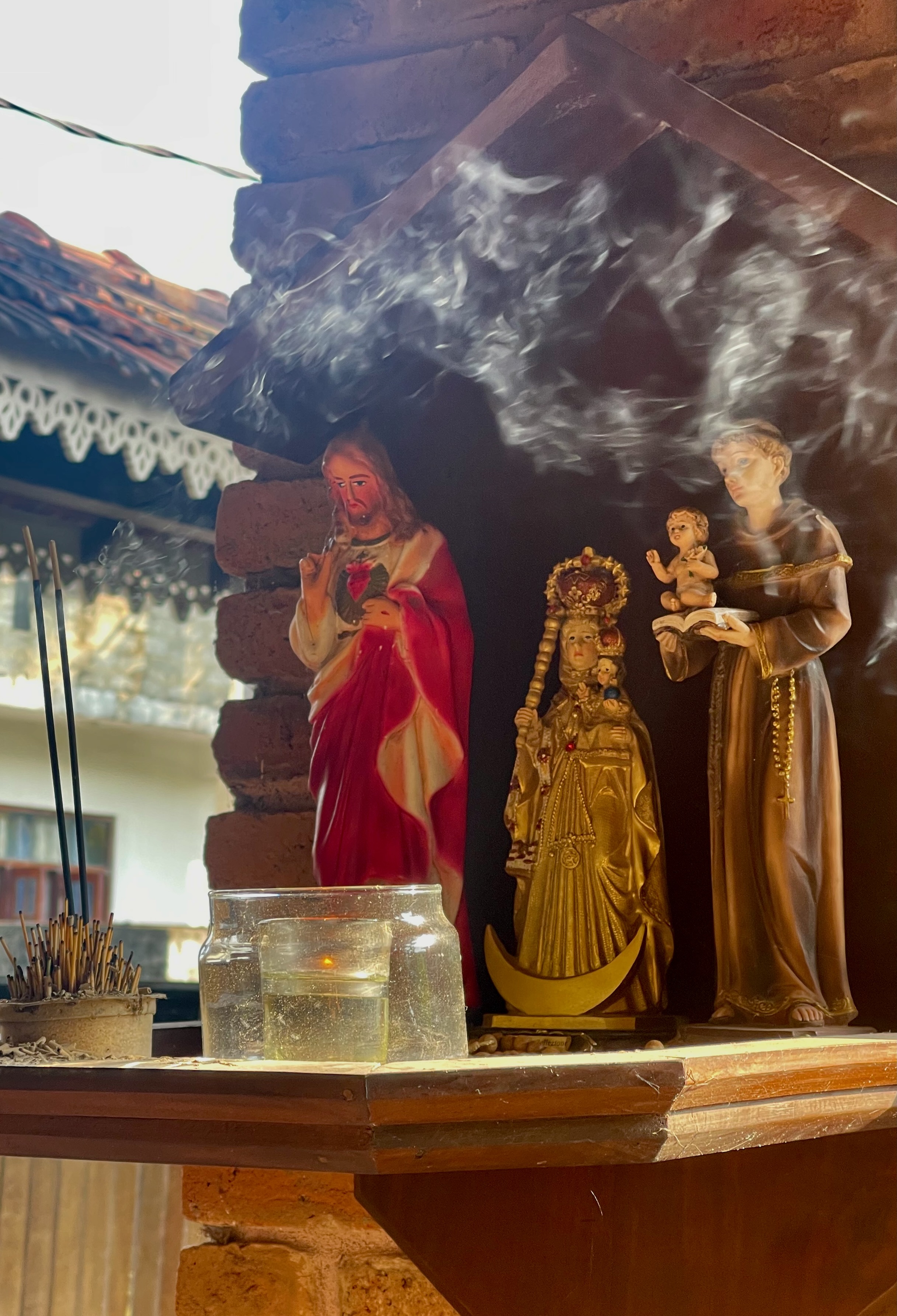
The hotel owner is lighting a joss stick in front of what I assume is a Buddhist shrine to honour his ancestors. On closer inspection these are Christian figures – Jesus as an adult, Joseph or a humble shepherd and at the centre, a gold Madonna and child but reminiscent too of a Hindu deity.
“To warn off the mosquitoes” he explains.
 Eithne Nightingale
Love it and the pictures are glorious – capture the sights so well. Hajra
LikeLike