In 2010 I wrote an article for The Australian newspaper East meets West in a World of Words about four wonderful days I spent at Galle Literary Festival in Sri Lanka. Who knew that, 15 years later, I would be invited back to discuss my book Child Migrant Voices in Modern Britain – Oral Histories 1930s – Present Day published in February 2024 by Bloomsbury.

For the session Storytelling as People’s Histories, chaired by sociologist and researcher Johann Peiris, I shared my experiences of gathering stories of child migration with Radhika Hetteirachchi who has collected stories of women’s conflict, courage and survival in Sri Lanka and with Aanchal Malhotra who has uncovered marginalised histories of Partition in India. Particularly evocative were the drawings by women of their visible and invisible scars left on their bodies by the Sri Lankan civil war and Aanchal’s account of of interviewing a woman constrained by male family members of talking of her abduction during Partition. The session inspired a young woman to approach me for advice on how to collect oral histories from the Sri Lankan community in London.
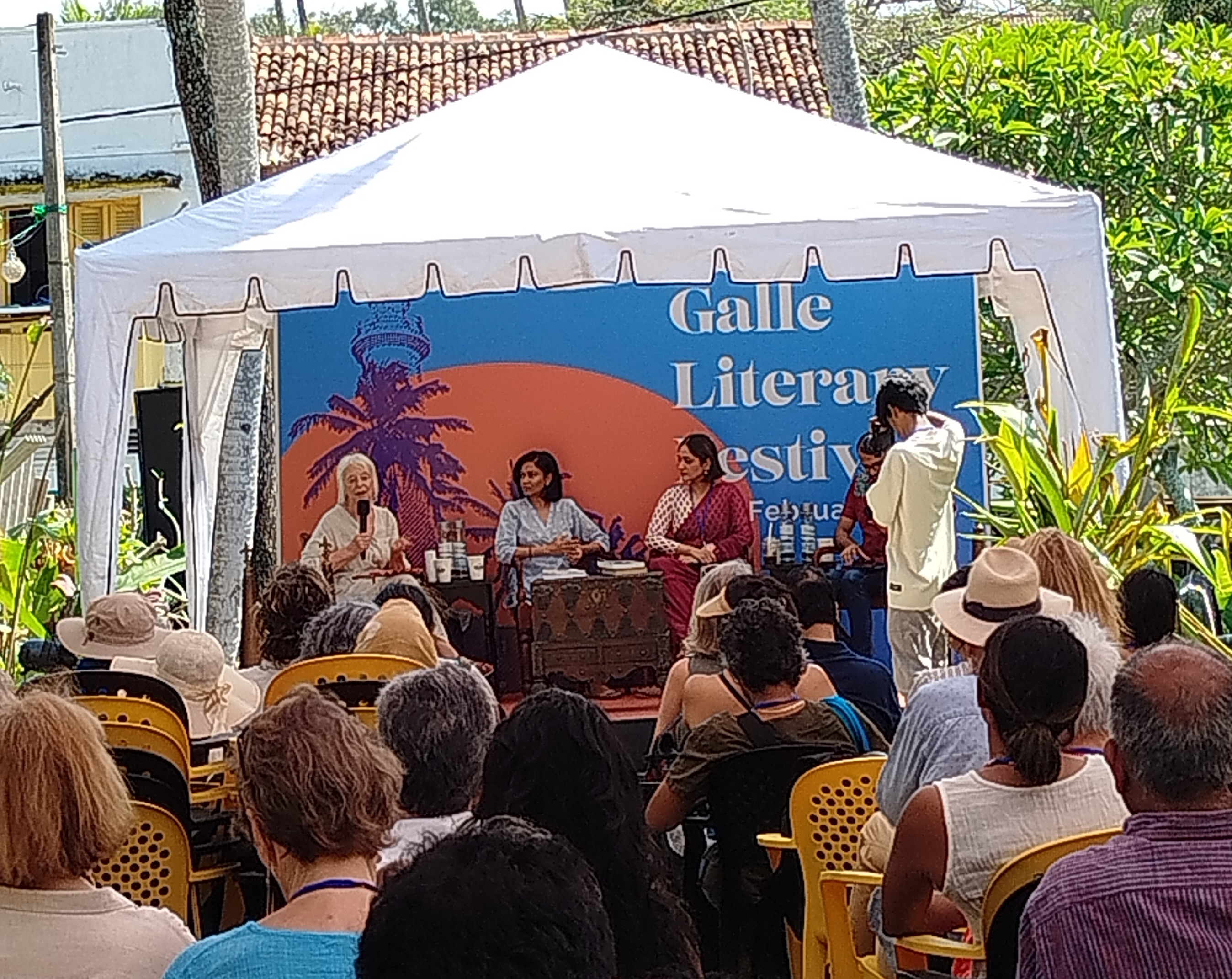
The following day Hajra Williams and I took to the stage with Marguerite Richards, a writer and editor living in Sri Lanka for the session Child Migrant Voices, opening with the film Passing Tides about Linh who escaped Vietnam by boat in 1979. By a wonderful coincidence Hajra who features in Child Migrant Voices, having migrated from Pakistan as a child in the 1970s was in Sri Lanka on a yoga retreat at the time. Hajra talked of the migration of her parents from India during Partition and then from Karachi to Scotland and the influence of her Pakistani Muslim heritage on her jewellery making. She read from her chapter about visiting Pakistan for a holiday and imagining a different life for herself than that in London with her husband Jon and their two children.
‘I remember I went to Murree, a hill station in the Swat Valley, up north… I remember seeing this clearing, and there was a little homestead, a woman and kids running around, and it looked like the most idyllic place in the world, lush and green with mist coming from the hills. I imagine this parallel universe where there’s another house where I married a Pakistani guy speaking Urdu, doing Asian cultural things. I have a deep connection with Pakistan, but I’m also Western and have chosen something else for myself. It doesn’t negate my Pakistani identity.’

The audience asked perceptive questions of both Hajra and myself and commented on the power and authenticity of our discussion.

Participating in events and press interviews did not allow me to participate in as many other sessions as I would have liked and certainly less than when I was a travel journalist. But on the last day Hajra and I were able to attend Repatriation: Objects of Empire with lawyer Naazima Kamardeen and Sathnam Sanghera, author of Empireland and Empireworld. There was a rousing call for transparency of what had been stolen or taken in dubious circumstances; for changes in the law that would ease the repatriation of objects collected during the colonial period from British national institutions such as the V&A where Hajra and I used to work; for an infrastructure to conserve objects in countries of origin; an acknowledgement of, and the need to redress for, past wrongs. Hajra and I were not lynched for having worked at the V&A, as Sathnam, I hope jokingly, suggested we might be.

We were only too aware of such issues when working at the V&A and welcome a more open debate and, indeed, action to redress past wrongs. We at least encouraged transparency and worked collaboratively with South Asian communities on major initiatives such as The Art of the Sikh Kingdoms in which Hajra and I were both closely involved, visiting gurdwaras across the country to encourage Sikh visitors to visit the exhibition. They did, in coach loads. We were delighted to hear that Sathnam still has a poster on his wall of the 1999 V&A Sikh exhibition It was also great to share our experience of working with the Sikh community with Artika Bakshi who writes children’s books about Sikh heritage and has a wider interest in the subject.
The last session Hajra, Jon and I attended was Understanding Sri Lankan Identity through Novels. I had already read Brotherless Night, by panel member, VV Ganeshananthan’s, winner of the Women’s Fiction Prize. The novel is set in Jaffna during the Sri Lankan civil war, fought between the Sinhalese-dominated state and Tamil separatist groups. It is told through the eyes of a young aspiring female doctor whose brothers join the Tamil Tigers after their eldest sibling is killed in anti-Tamil riots. But I had not heard of the work of another panel member, Ameena Hussein. After the session I rushed to the festival bookshop for The Moon in the Water by Ameena, who unlike many authors of Sri Lankan origin, has returned to live in Sri Lanka. The bookshop was in complete darkness – a total black out across Sri Lanka had been caused by a monkey breaking into a power station and coming into contact with a grid transformer. The bookseller reached down in the dark to locate The Moon in the Water and I paid in Sri Lankan cash.
Being a presenter at the festival was different from being a travel journalist when I could choose where to go and what to do. This time I had timed responsibilities – to present, talk to the public and the press. There was another difference. Last time I stayed in a local bed and breakfast within the walls of Galle Fort but a clash with a cricket match meant that this year I stayed some way outside. Only after the festival ended, when staying in Fort Printers, a tasteful boutique hotel in a restored 18th-century Dutch building, was I able to revive memories of the sleepy, intimate charm, of Galle Fort – loving couples, their feet dangling from the Fort ramparts looking out to sea at sunset; Muslim boys and girls in white peering out of trellis windows or carrying school books down the Fort’s narrow streets lined with colonial villas.

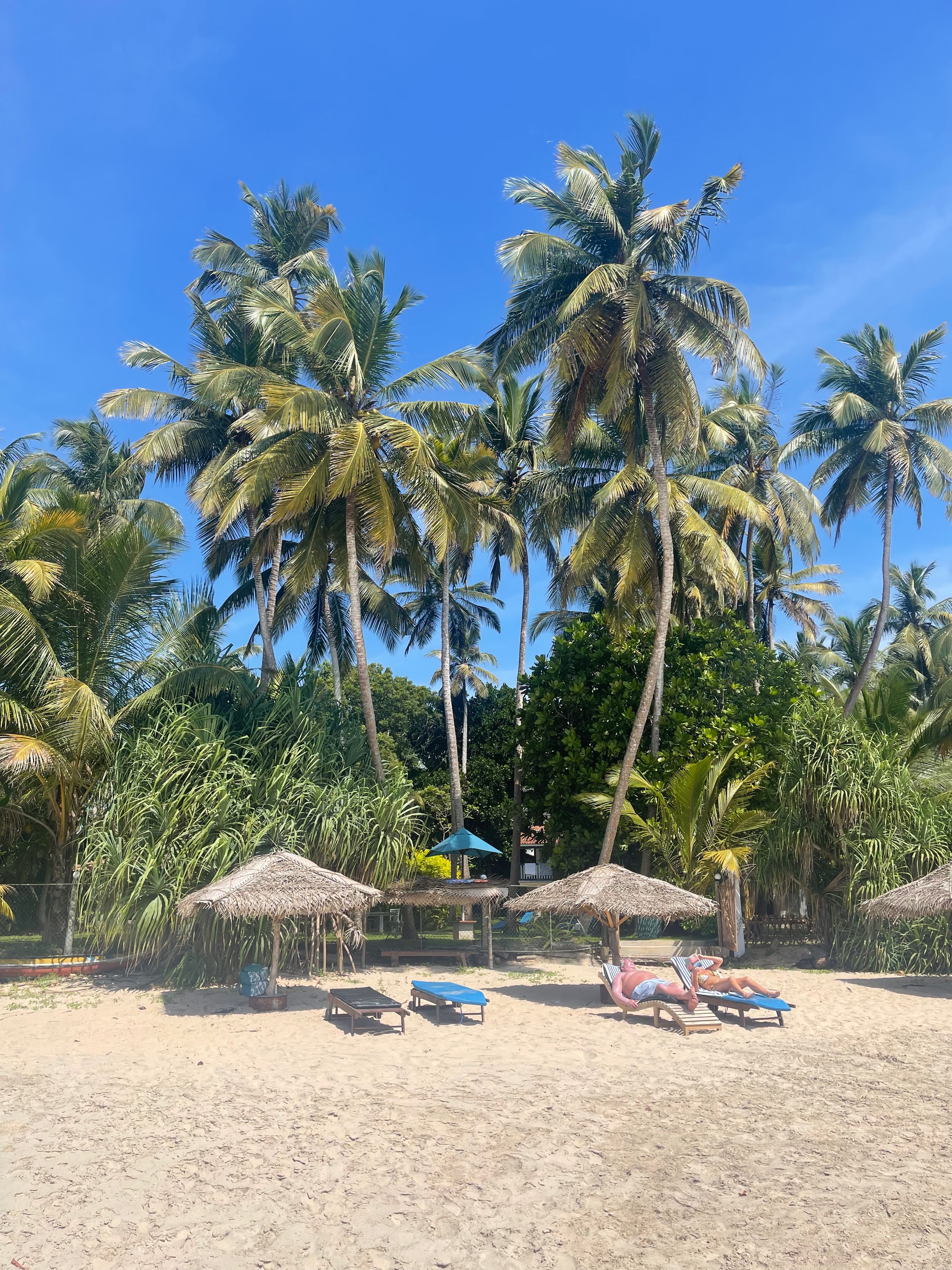
A two-hour drive takes me to Mawella beach near Tangalle. I lie under coconut palms to the sound of thundering waves, a seeming paradise, reading Moon in the Water, a powerful story of two adopted siblings separated as children. It ends with a scene of the tsunami of 2004.
Thank you Galle Literary Festival for this wonderful opportunity to meet others and share Child Migrant Voices.
 Eithne Nightingale
Wonderful!
LikeLike
Wow Eithne sounds amazing.
I’ve read Brotherless Night
Lucky 🍀 you!
Sent from my iPhone
LikeLike
Such an interesting account of the festival and the subjects being discussed. Love the pictures as well especially of the children on their way to school and the temples. Reminds me of holidays near Galle in the past.
Alison
LikeLike